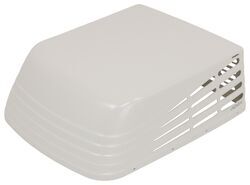
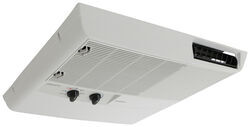
Find replacement AC units that match your existing setup.
Shop Replacement AC Units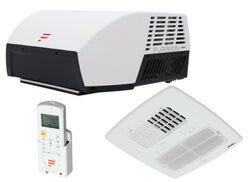
Everything needed for first-time installs or full upgrades.
Shop Complete RV AC SystemsWon't turn on, trips the breaker, or the compressor cycles on and off. These often trace back to a dirty part or a weak capacitor.
Not blowing cold, weak airflow, or heat that can't keep up. Usually a clogged filter, coil, or duct issue.
Louder than usual, water inside, or a musty smell. Almost always a maintenance fix, not a replacement.
No power, tripping breakers, short-cycling, or freezing up. Most of the time, a good cleaning or a new capacitor gets you back in business.
Troubleshoot Power IssuesIf the air's barely moving or it's just not getting cold, start with your filter and coils — a quick check can save you a service call.
Troubleshoot Airflow IssuesLouder than normal, water where it shouldn't be, or that musty RV smell? These are almost always easy maintenance fixes.
Troubleshoot Other IssuesBefore you shop, confirm what is already on the roof and inside the RV by finding the current brand, model number, ducted or non-ducted layout, thermostat details, and whether your system has multiple zones.
Some RV owners can replace only the rooftop unit, but others need a larger system change that also includes the thermostat, control box, air distribution box, ceiling assembly, ducting, or furnace-control path.
Once you know your current setup, shop inside the lane that matches it, whether that means a rooftop-only replacement, a same-brand compatibility check, a full-system swap, a ducted or non-ducted path, a power-constrained setup, or a repair-vs-full-system decision.
Before placing the order, double-check fit and installation details like roof opening, roof thickness, rooftop clearance, control compatibility, wiring, startup and running power draw, included hardware, and whether the job is better handled by an installer.
Make sure your rig can actually power the AC you pick.
Check your generator size, 30-amp service, solar or battery setup, and whether a soft start makes sense before you buy.
See Power & Setup GuidesKnow what it takes before you buy, including roof-opening requirements, wiring, whether the system is ducted or non-ducted, what's included in the box, and when to call for help.
Browse All AC GuidesDon't want to climb on the roof yourself?
We'll connect you with a trusted local pro who can handle the whole job, from mounting to wiring.
Find an Installer Near YouWe're etrailer. Real People. Real Advice. Real Hands-on Help.
Get Support